Cross training has a simple idea at its center: train movements that resemble real life, with resistances that scale to whoever is doing them. A farmer, a nurse, a retiree and a high school athlete all squat, lift, carry, push and climb; they just do it at different loads. Programs built on that idea (functional or cross training, including formats like the Fit Fast program described by Monroe's Enterprise Fitness) train the patterns rather than a single sport's skills, and they adjust the difficulty to the person in front of the coach.
The format suits the Piedmont well. Summer heat punishes one-dimensional fitness fast: the person who only runs wilts in a strength task, and the person who only lifts puffs on the stairs. Cross training builds the overlap, and this guide explains how the pieces fit and how scaling keeps it safe for beginners.
The movement menu
Sessions rotate through a short list of foundational patterns: squats and lunges, hip hinges and deadlift variations, presses and rows, carries, sled or step work, and short conditioning pieces that combine them. Variety is structured, not random: the patterns repeat weekly while the combinations, loads and time domains change, which is how the body keeps adapting without the joints taking the same beating every day.
A typical class-length session runs a warm-up and skill piece (practicing one movement at light load), a strength piece, then a conditioning piece of eight to twenty minutes where the day's movements are combined at a pace you can sustain with decent form. The clock creates intensity; the coaching exists to keep form from being the price of it.
Scaling: how one workout fits everyone
| Pattern | Standard version | Scaled version |
|---|---|---|
| Deadlift | Barbell from the floor | Kettlebell deadlift from a block |
| Squat | Barbell back squat | Goblet squat to a box |
| Press | Barbell overhead press | Dumbbell press, seated if needed |
| Conditioning | Running intervals | Bike or rower intervals |
| Carry | Heavy farmer's carry | Moderate carry, shorter distance |
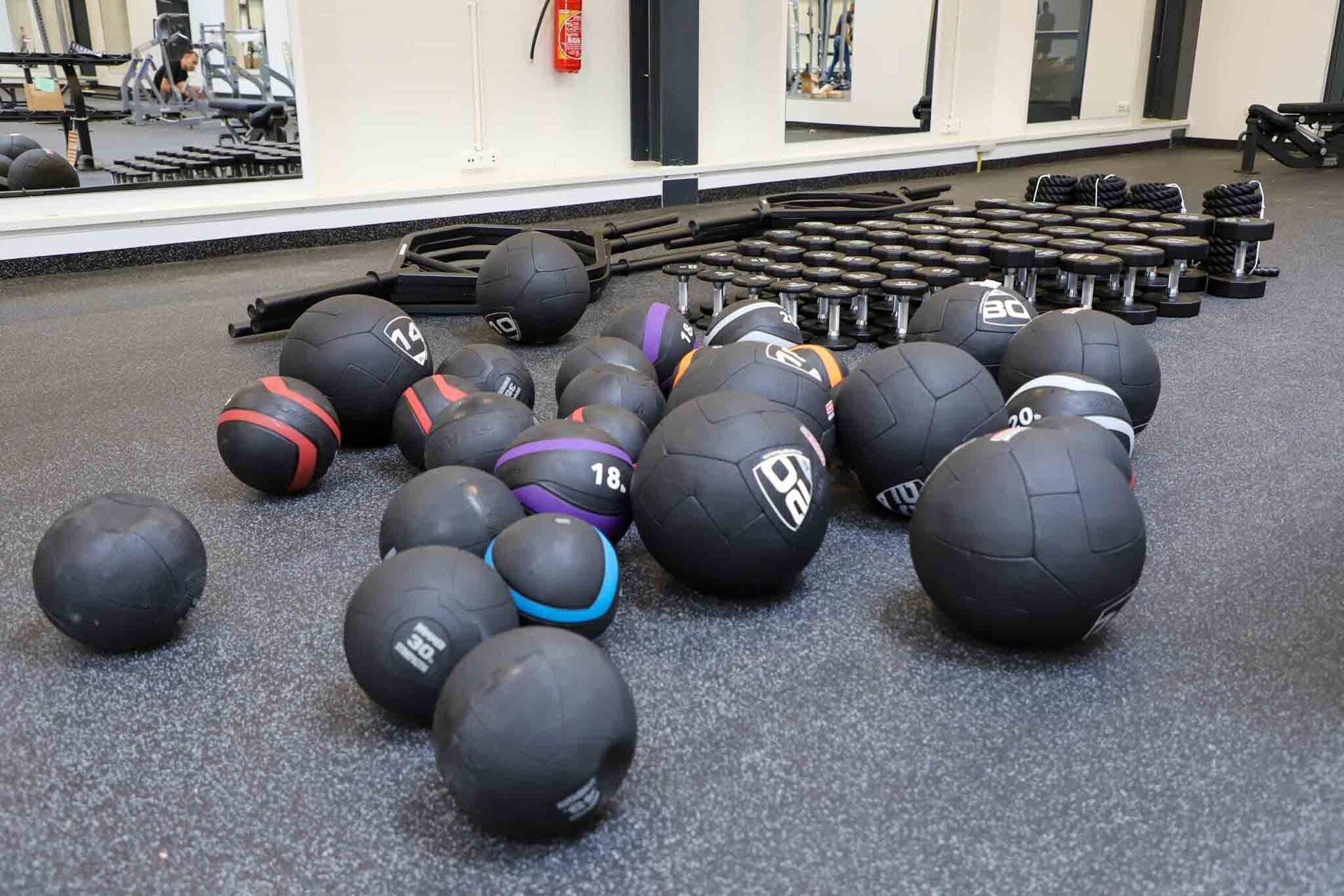
A scaled version is not a lesser version. It is the same pattern at a load and range the person can perform well today, and it progresses toward the standard as strength and mobility allow. This is the mechanism that lets a de-conditioned beginner and a competitive athlete share a session productively, and any program that cannot show you its scaling ladder for the day's workout is improvising.
Who it suits, and who should be careful
Cross training suits people who are bored by single-mode exercise, who need general capacity for a physical job or a sport season, and who respond to variety and a group clock. It is deliberately broad: if your goal is a maximal bench press or a marathon, a specialized program will beat it at that one thing while losing at everything else.
Care is needed in two places. Competitive formats can tempt people to chase the clock past their technique, especially on tired days; the discipline is to scale early rather than sloppy. And high-repetition lifting under fatigue is a skill to earn over months, not a first-week assignment. A coached program handles both by grading the work to the athlete, which is why the coaching, not the equipment list, is the thing to evaluate when you visit a gym.
Trying it without wrecking your week
Start with two sessions a week and ordinary training or walking between them. Expect honest soreness after the first conditioning pieces; it fades as the patterns become familiar. Eat and sleep like it matters, because in a program built on varied demand, recovery is the limiting factor more often than effort is.
Give it a month before judging. The first sessions teach movements; the fitness shows up across weeks three and four, usually as a general sense that stairs, loads and long days have gotten cheaper. That breadth is the entire promise of the method, and for most people who do physical things for a living or a hobby in Union County, it is the most useful fitness there is.
Common questions
Is cross training safe for beginners?
Yes, when it is coached and scaled. Every foundational movement has a lighter, simpler version, and a good program grades the workout to the person. Beginners should start with two sessions a week and prioritize form over the clock until the patterns are solid.
How is cross training different from a regular gym workout?
It trains whole movement patterns (squat, hinge, press, carry) in varied combinations with a conditioning element, rather than isolating muscles on machines in a fixed routine. The goal is broad, usable fitness instead of one quality at a time.
Will cross training help with my job or sport?
For physical jobs and most recreational sports, yes: the patterns and the work capacity transfer directly to lifting, carrying, climbing and sustained effort. Specialists chasing a single maximum (a powerlifting total, a marathon time) will eventually need dedicated training for that goal.
Photos in this guide are representative stock images.
← All guides from Enterprise Fitness, Personal Training and Event Center← Back to Enterprise Fitness, Personal Training and Event Center